The Attic Hatch, and the Heat That Sits Above the Bed
The perimeter has a top edge too. On a two-story house it is the roofline, and the way to it is a folding ladder in the hallway ceiling that nobody pulls down until something scratches.
The stop
I was called to this house for a scratching sound above the bedroom ceiling that started around dusk. Before going up I went outside and looked at the gables. The louvered vent on the east end had lost its insect screen, and a paper wasp nest the size of a grapefruit hung just inside it. That was not the scratching, but it was going to be a problem by August. The scratching was further in.
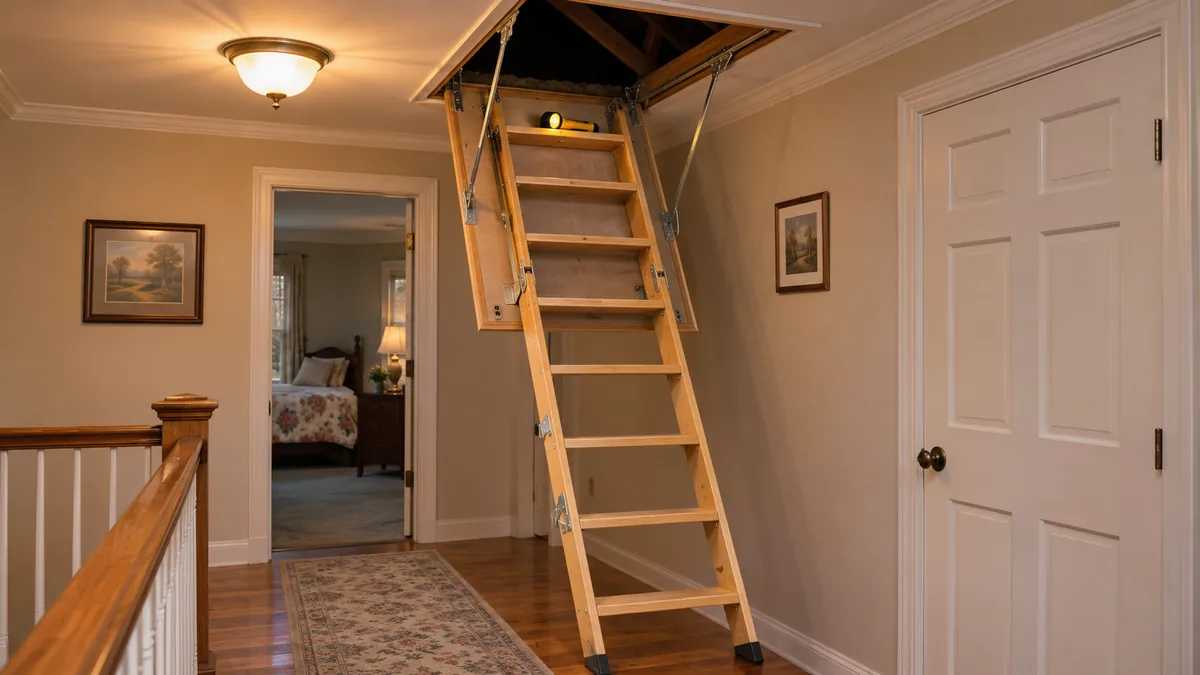
In the attic, with the light, the insulation told the story. Fiberglass batts had been tunneled and matted along the eave on the east side, there were droppings in a line along a joist, and a soffit panel had a gap at the corner where the fascia had shrunk. A squirrel or a roof rat had been coming and going through that corner and spending the early evening in the warmest part of the house. The hatch itself, when I looked back at it from above, was a bare sheet of plywood with no insulation and no weatherstrip around its frame.
The job was to screen the gable vent properly, deal with the nest at dawn when it was quiet, close the soffit gap with hardware cloth and sealant, set a station near the run, and come back in two weeks to confirm the attic was empty before closing it tight. I also cut a piece of rigid foam to fit the back of the hatch and ran a strip of weatherseal around the frame, which has nothing to do with pests and everything to do with the next part.
The note
An attic in summer is an oven sitting on top of the bedrooms. On a hot afternoon the air under the roof can run far above the outdoor temperature, and an uninsulated hatch lets that heat drain straight down into the hallway and into the room next to it, which in this house was the main bedroom. The owner said that in summer the upstairs never cooled off until well after midnight, and that he had long since stopped expecting to fall asleep before one.
Here the note leaves my trade. Research has looked at the temperature of the room a person sleeps in, and the plain version is that a cool room with enough blanket tends to be rated better than a warm room with little, and that the body seems to want to drop a little in temperature on its way into sleep. Some men notice that the nights they sleep hardest are the ones that started cold, and that it is much easier to warm a cool bed than to cool a warm one.
The habit is about the top of the house in the last hour of the day. In summer, open the upstairs windows at dusk and close them again early in the morning while the air outside is still cooler than the air inside; the attic will empty some of its heat that way. Set the thermostat a few degrees lower than the daytime setting an hour before bed, not at bedtime. Keep the attic hatch sealed as if it were an exterior door, because for heat it is one. And look up at the gable vents from the yard once a season; a missing screen is easier to spot from the lawn than from the ladder.
I came back two weeks later. The station was untouched, the soffit was closed, and he said the upstairs was a different house in the evening. I will take the credit for the soffit and leave the rest to the foam and the windows.
Worth asking a doctor about
If a man wakes soaked through more nights than not, with the room already cool, or wakes hot and flushed again and again through the night regardless of the season, the attic is not the cause and the thermostat is not the fix. That is a pattern a physician should hear about, with dates if he can remember them.